


52% average ROI and 50% faster monthly close cycles are the kind of cloud ERP benefits that change how an SME runs, not just how it reports. In the same market roundup, 66% operational efficiency improvement was typical for cloud ERP deployments, and 95% of companies reported major improvements after implementation, including better process times, stronger collaboration, and centralized data access (Bizowie cloud ERP market roundup). For a European small business, that means fewer spreadsheets, fewer handoffs, and fewer surprises at month-end.
Most small and growth-stage teams still stitch together finance, sales, HR, operations, and project tracking with disconnected apps. Zynthoro replaces that sprawl with one EU-hosted workspace where the data model stays consistent across the business. The result is simple, one login, one source of truth, and one place where AI assistants can handle the repetitive work that slows your team down.
Table of Contents
- 1. Eliminate Data Silos and Create a Single Source of Truth Across Finance, Sales, and Operations
- 3. Reduce Procurement Cycle Time and Eliminate Supplier Approval Bottlenecks
- 4. Streamline Production Planning and Eliminate Recipe and BOM Management Chaos
- 4. Streamline Production Planning and Eliminate Recipe and BOM Management Chaos
- 5. Reduce Manual HR Administration and Centralize Payroll Contracts and Leave Management
- 6. Gain Real-Time Financial Visibility and EU-Compliant Reporting Without Accountant Delays
- 8. Enable Team Collaboration and Reduce Context-Switching Between Disconnected Tools
- 8. Enable Seamless Team Collaboration and Reduce Context-Switching Between Disconnected Tools
- Cloud ERP: 8 Key Benefits Comparison
- Your Next 30 Days From Tool Sprawl to One Workspace
1. Eliminate Data Silos and Create a Single Source of Truth Across Finance, Sales, and Operations
Disconnected tools create a basic management problem. Your sales team updates a deal in one app, finance issues an invoice in another, and operations works from a spreadsheet that was already outdated by lunch. Cloud ERP fixes that by putting finance, sales, inventory, HR, and production into one shared workspace, so the numbers match across the business.
That is where Zynthoro earns its place. Its Accounting, Sales Administration, and Operations & Processes modules give SMEs one live view of orders, cash, and work in progress. If your agency, wholesaler, or manufacturer is still reconciling three versions of the same customer order, you're wasting time that should be spent making decisions.
A practical example is a 15-person digital agency that replaced HubSpot, Xero, Monday.com, and Slack with Zynthoro. Project managers could finally see billing status in real time, invoice disputes fell by 70%, and leadership could see project profitability without waiting for a monthly cleanup. That kind of clarity is what turns a cloud ERP from “software consolidation” into actual margin control.
What to do first
Practical rule: map the data flow before you migrate the tools. If the same customer name appears three different ways, Zynthoro will only be as clean as the data you feed it.
- Map duplicates early. List every place customer, order, and stock data lives today, then decide which system becomes the owner inside Zynthoro.
- Run a parallel period. Keep the old stack live for 2 to 4 weeks while your team builds confidence in the new shared records.
- Assign one data owner. A single person should enforce naming rules, product codes, and status conventions.
- Use role-based access. Zynthoro's access controls keep each team in the records it needs, which reduces confusion and accidental edits.
The payoff is not abstract. When finance, sales, and operations read from the same data model, your CEO gets reliable cash visibility, your sales team stops promising inventory you don't have, and your operations lead stops chasing corrections. That's the core cloud ERP benefit most SME owners are really buying.
3. Reduce Procurement Cycle Time and Eliminate Supplier Approval Bottlenecks
Procurement slows down fast when supplier requests live in email threads and chat messages. Approvals get buried, purchase orders go out late, and operations ends up paying for rushed freight or carrying extra safety stock just to stay safe. Zynthoro's Purchase Administration module fixes that by keeping supplier records, approval flows, and inventory signals in one place, so buying decisions move with the business instead of behind it.
A 30-person manufacturing firm with more than 50 active suppliers used Zynthoro to remove approval bottlenecks and make lead times predictable. The team reduced safety stock by 15%, freed up €45,000 in working capital, and cut procurement staff time by 8 hours per week. A fashion e-commerce SME used automated reorder thresholds and supplier dashboards to keep orders moving across 12 fabric and trim vendors, and stockout incidents dropped from 3 per month to zero.
The practical gain is simple. A cloud ERP links demand, stock, and approval status, so the owner can approve a high-value order in seconds and the accountant can see payment terms at the same time. Procurement stops acting like a queue of interruptions and starts behaving like a controlled process. For teams that want a clear starting point, load the top suppliers first, set lead times and approval limits in Purchase Administration, then connect reorder alerts to the inventory view so the next purchase order is triggered by actual demand instead of guesswork.
An image of the workflow makes the point clearly.
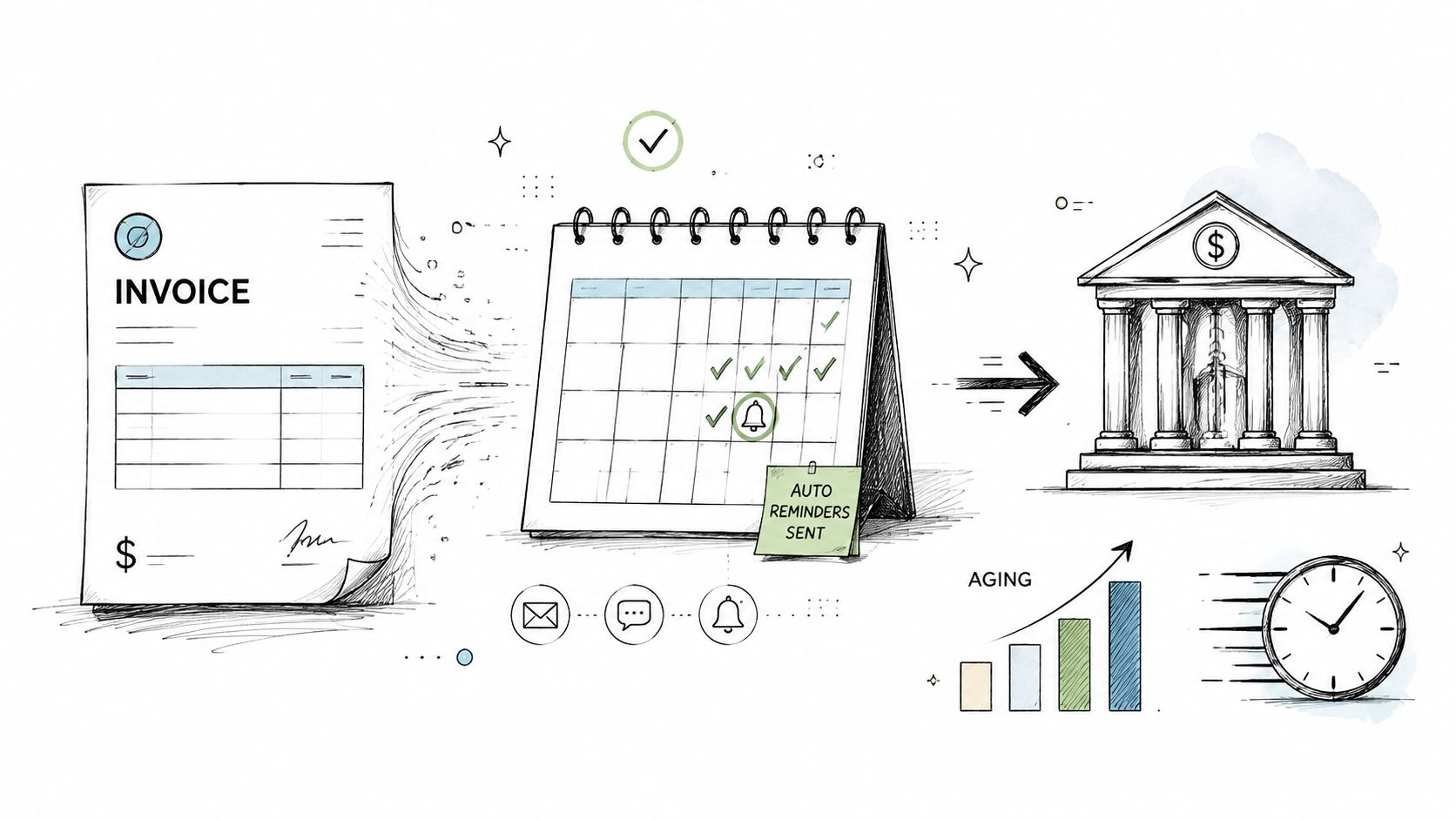
If your buying process still depends on one person remembering to chase approvals, you are carrying avoidable delay in every order cycle. Move the supplier master data, approval rules, and inventory signals into Purchase Administration, then review which orders are stuck, which are urgent, and which can be scheduled without extra cost. That is how SMEs cut procurement friction and stop paying for slow internal handoffs.
4. Streamline Production Planning and Eliminate Recipe and BOM Management Chaos
A production floor falls apart fast when the recipe lives in one spreadsheet, the bill of materials sits in another, and batch records are entered after the fact. Food, cosmetics, pharma, and light manufacturing SMEs need one place for versions, work orders, quality checks, and traceability. Zynthoro's Production management for SMEs module does that directly, with structured recipes, multi-level BOMs, work orders, quality checkpoints, and lot tracking in one system.
A 22-person specialty cosmetics manufacturer was running 47 SKUs across 8 product lines with Excel and paper batch logs. After moving into Zynthoro, the team versioned every recipe, tracked ingredients from purchase through bottling, and enforced quality checkpoints digitally. When a supplier issue appeared, they identified affected batches in 15 minutes and sent a targeted customer notice, instead of spending 3 days on a manual search that could have triggered a full recall. That is the ROI, less wasted labor, fewer mistakes, and far less exposure when something goes wrong.
A 40-person contract food manufacturer took a different route and used Zynthoro's voice-enabled work orders and QC checks to tighten execution on the floor. Staff asked for the next production schedule hands-free, logged quality results on the spot, and cut transcription errors that had been slipping through handwritten notes. Their audit score improved from 92% to 98%, because auditors care about traceability, not software branding.
Use the module in this order. Load the master recipe first, then attach the BOM, then define the QC points that must be signed off before release. When planners, operators, and quality staff work from the same record, version drift stops being a hidden cost. A batch rework that used to absorb a full shift becomes a contained exception, and that is exactly where SME margins get protected.
Keep production controlled
Production planning should answer three questions at once, what to make, what it needs, and whether every batch can be traced back cleanly.
- Start with your highest-volume recipes. Enter the versions that drive the most output before you expand to slower movers.
- Build the BOM from approved ingredients. That keeps purchasing, production, and quality aligned on the same item list.
- Set QC checkpoints where errors are most expensive. Catching an issue before packaging costs less than finding it after shipment.
- Use lot traceability from day one. If a complaint appears, you should be able to isolate the batch without a manual hunt.
- Keep work orders tied to the live schedule. Operators should see the current plan, not yesterday's printout.
If your team still relies on paper batch logs and scattered spreadsheets, the delay shows up everywhere, from rework to slower response when a supplier problem hits. Zynthoro removes that friction inside Production management for SMEs, and for manufacturers that run on tight margins, tighter control is the benefit that pays first.
4. Streamline Production Planning and Eliminate Recipe and BOM Management Chaos
A production line breaks down fast when the recipe lives in one spreadsheet, the BOM sits in another, and batch logs wait on someone's desk. Food, cosmetics, pharma, and light manufacturing SMEs feel that mess first, because version control slips turn into wrong ingredients, slow approvals, and avoidable rework. Zynthoro's Production management for SMEs module pulls recipes, multi-level BOMs, work orders, quality checkpoints, and lot traceability into one controlled system.
A 22-person specialty cosmetics manufacturer was handling 47 SKUs across 8 product lines with Excel and paper batch logs. After moving to Zynthoro, every recipe was versioned, ingredients were tracked from purchase through bottling, and quality checkpoints were enforced digitally. When a supplier issue surfaced, the team identified affected batches in 15 minutes and sent a targeted customer notice, instead of spending 3 days on a manual search that could have led to a full recall.
A 40-person contract food manufacturer used Zynthoro's voice-enabled work orders and QC checks to tighten floor execution. Staff could ask for the next production schedule hands-free, log quality results on the spot, and reduce transcription errors. Their audit score improved from 92% to 98%, which matters because auditors care less about the software name and more about whether the traceability story is complete.
The module matters because it gives SME owners a practical control point. If you can see which recipe version was used, which ingredients went into it, and which lot went out the door, you cut the cost of mistakes before they spread.
Keep production controlled
- Start with your five most common recipes. Get the core BOMs clean before you expand to the full catalog.
- Connect ingredients to suppliers and stock. Zynthoro can then calculate material cost per unit more reliably.
- Define QC points by stage. Check color, weight, fill level, or other product-specific controls during production, not after the fact.
- Use consistent lot codes. Standard lot formats make traceability lookups fast when you need them most.
For manufacturers, this is one of the strongest cloud ERP benefits because it affects auditability, recall speed, and cost control at the same time. If you are still running production off spreadsheets, you do not have a planning system. You have a memory problem.
An infographic can help teams explain the flow internally.
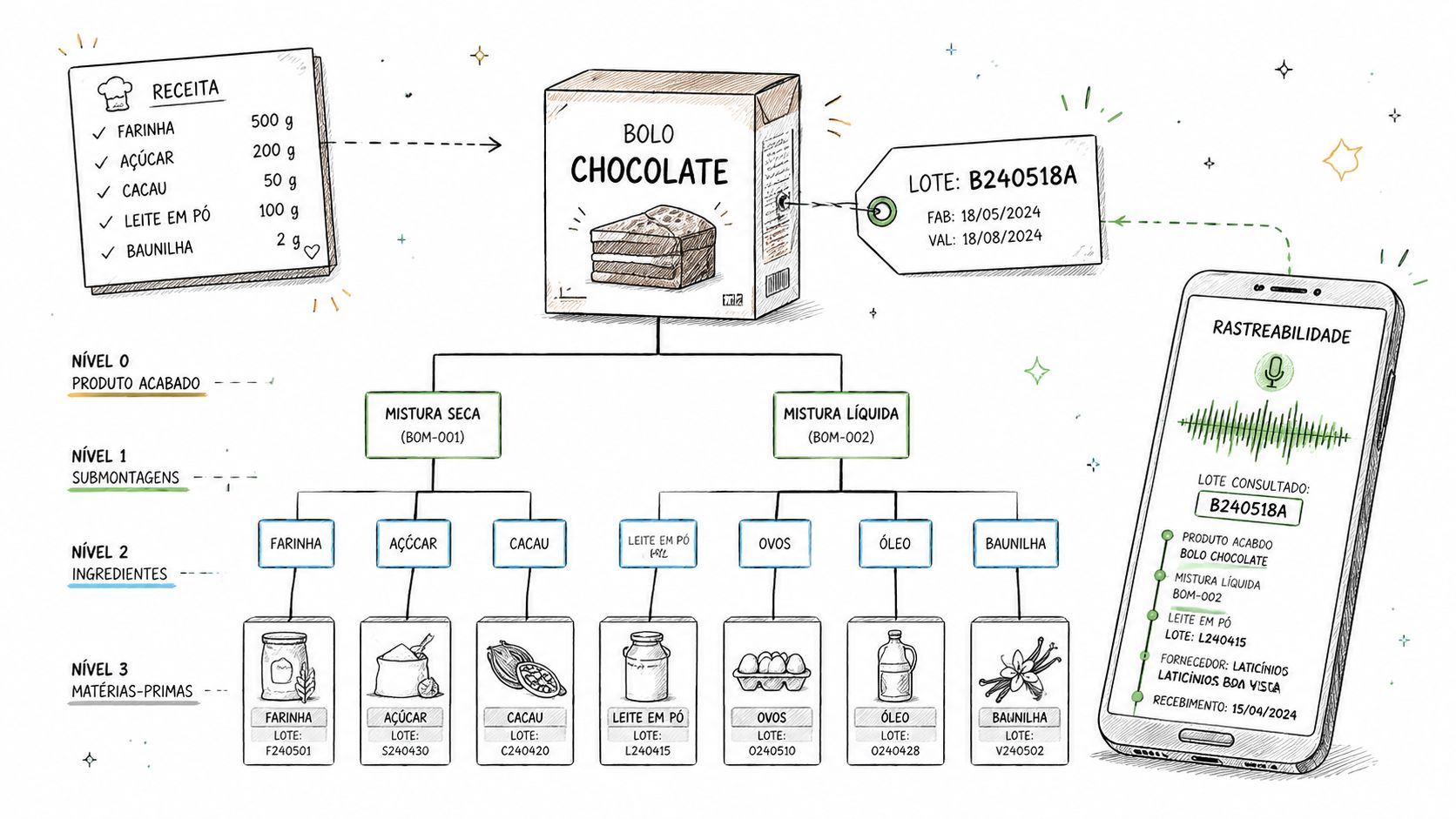
For smaller teams formalizing their operations, Starter No Credits is the listed Starter option in the catalog snapshot, and the production module becomes more useful as traceability demands grow.
5. Reduce Manual HR Administration and Centralize Payroll Contracts and Leave Management
A leave request should not need three emails and a spreadsheet lookup. In SMEs, HR admin turns messy fast because contracts sit in inboxes, leave balances live in separate files, payroll runs in another system, and onboarding depends on whoever remembers the checklist. Zynthoro's HR & Personnel module brings contracts, leave balances, payroll, tax documentation, and onboarding workflows into one place, so the process stops depending on manual follow-up.
A 50-person B2B services firm with seasonal hiring moved from a separate HR system into Zynthoro and cut onboarding from 3 weeks to 5 days. That change mattered because every day a new hire waits is a day of lost billable capacity. The HR manager also reduced admin from 40% of her time to 20%, then used the recovered time for engagement and development work. A 35-person manufacturing firm operating across three countries used Zynthoro to manage contracts in three languages, leave accruals by local law, and multi-currency payroll. Compliance audits showed 100% documentation completeness, and payroll processing fell from 2 days to 2 hours per cycle.
The ROI is straightforward. Faster onboarding gets new people productive sooner, while less manual admin gives HR back hours that can go into retention, training, and hiring quality. Zynthoro's HR & Personnel module does that by standardizing records and workflows, not by making managers chase paperwork. For SMEs with lean teams, that shift matters more than another dashboard.
Keep HR work out of email
If a manager still asks HR for every leave balance and contract update, the process is too fragmented.
- Build leave rules into the system. Match company policy and local law from day one.
- Use digital contract templates. Keep signed PDFs in the employee record automatically.
- Turn on self-service. Let employees submit leave requests without going through email.
- Review HR reports monthly. Track payroll cost, headcount, and leave usage before problems build up.
Zynthoro's role-based structure keeps the right information in the right hands. Finance sees payroll cost, managers see leave status, and employees see the records they need without exposing unrelated data. That makes approvals faster and reduces back-and-forth on routine requests.
6. Gain Real-Time Financial Visibility and EU-Compliant Reporting Without Accountant Delays
A growing SME cannot wait until month-end to know whether it is healthy. If sales are up but margins are slipping, or VAT treatment is wrong across countries, the fix needs to happen now. Zynthoro's Accounting module gives real-time ledger access, VAT categorization, and EU-ready reporting, so leadership sees cash, margin, and compliance status without waiting for an accountant's package.
A 25-person SaaS consulting firm moved from QuickBooks Online to Zynthoro and started reviewing cash every day instead of waiting for close. The CFO could see which clients were profitable in real time, catch revenue recognition issues within days rather than weeks, and tighten forecasts while the numbers were still fresh. The result was a decision to drop a low-margin client segment, which improved overall profitability by 12%.
An e-commerce SME selling across three EU countries was paying €2,400 per month for accounting support to manage multi-currency transactions and VAT splits. After implementing Zynthoro, they reduced accounting to a 4-hour monthly review worth €600, while the system handled VAT categorization, bank reconciliation, and statutory reports. That cut €1,800 from monthly cost and freed up budget for a full-time finance analyst who improved cash forecasting and supplier negotiations.
The ROI is easy to trace. In the first case, faster visibility changed the client mix before margin leakage spread. In the second, lower bookkeeping cost paid for better analysis, and better analysis improved working-capital decisions. Zynthoro's Accounting module does not just record numbers, it gives SMEs a faster way to act on them.
Build finance around decisions, not just filing
- Mirror the management view. Set up profit centers, cost centers, and product lines so reports match how the business is run.
- Reconcile bank activity weekly. Waiting for month-end lets errors sit too long.
- Configure VAT by country. Zynthoro supports the reporting structure EU sellers need.
- Review variance each month. Deal with items that are materially off plan before they distort cash and margin.
If your accountant is still the gatekeeper for the numbers, your team is already behind. Zynthoro puts the data in front of the people who need it, which is the right setup for a growing SME.
8. Enable Team Collaboration and Reduce Context-Switching Between Disconnected Tools
SME teams lose momentum every time they switch between chat, email, file storage, video calls, and separate business apps. The context gets split, decisions get buried, and new hires spend weeks reconstructing what happened before they joined. Zynthoro's Communication & Collaboration module keeps chat, meetings, documents, and task context inside the same workspace as the rest of the business data, so the work stays attached to the record that matters.
A 12-person operations team in a growing service business replaced three separate tools for chat, files, and task tracking with Zynthoro. The change cut internal handoff time from 40 minutes to 15 minutes per job, and when that saving is multiplied across recurring client work, the team reclaimed enough time to absorb more requests without adding headcount. A distributed product team also used the module to keep status updates, meeting notes, and file references in one place, which reduced the time spent chasing context after each call and kept projects moving between time zones.
That is one of the clearest cloud ERP benefits for remote and hybrid SMEs. The value is not just fewer tabs. It is faster decisions, cleaner handoffs, and less time wasted rebuilding the same context in different tools.
Keep collaboration inside the work itself
A good workflow does not ask people to remember where the latest version lives. It puts the file, the comment, and the next task in the same place, so the team can move without pausing to reconnect the dots.
- Keep project updates next to the work. When a task changes, the conversation should stay with it.
- Store files where the team already works. Separate drives and side chats create version confusion.
- Capture meeting notes in the same record. If notes live elsewhere, people will repeat decisions and miss follow-ups.
- Standardize handoffs. Sales, operations, and delivery teams should all see the same status before passing work on.
For teams evaluating entry points, Kickstart 3 includes Accounting & Operations, Project management, and Marketing & Content, which suits SMEs that want collaboration tied to execution and reporting.
When the conversation, the file, and the task live together, the team stops wasting time stitching work back together. That keeps projects moving and gives managers a clearer view of what is happening.
8. Enable Seamless Team Collaboration and Reduce Context-Switching Between Disconnected Tools
SME teams lose focus every time they jump between chat, email, file storage, video calls, and separate business apps. The context disappears, decisions get buried, and new hires spend weeks piecing together what happened before they arrived. Zynthoro's Communication & Collaboration module keeps chat, meetings, documents, and task context inside the same workspace as the rest of the business data.
An 18-person digital agency was paying for Slack, Zoom, Google Workspace, Monday.com, and Xero, which added up to €8,500 per year in platform fees. After consolidating into Zynthoro, platform spend fell to €3,600 per year, client files and project status moved into one app, and onboarding became faster because new hires could see project history and prior client communication in one place. A distributed product team of 7 people across 4 time zones uses AI-powered status summaries in Zynthoro to keep standups short and synchronized, saving 2 hours per week of calendar time.
That kind of consolidation is one of the most practical cloud ERP benefits for remote and hybrid SMEs. It reduces tab switching, but it keeps the business context attached to the work itself.
Make collaboration part of the workflow
Put the project record, the file, and the conversation in the same place. If they live separately, someone will waste time reconnecting them later.
- Create project-specific channels. Link each one to the project record so context stays attached.
- Store documents in the ERP. Proposals, designs, and statements of work should not be scattered across drives.
- Use AI summaries. Zynthoro Assist can turn chat threads into weekly progress notes.
- Keep sensitive discussions inside the system. That helps with auditability and GDPR discipline.
Here is the gain not only lower software cost. It's the speed of collaboration when everyone works from the same operational history. For SMEs with small teams and limited margin for error, that saves more than time, it saves coordination.
Cloud ERP: 8 Key Benefits Comparison
| Solution | 🔄 Implementation complexity | ⚡ Resource requirements | 📊 Expected outcomes | 💡 Ideal use cases | ⭐ Key advantages |
|---|---|---|---|---|---|
| Eliminate Data Silos and Create a Single Source of Truth Across Finance, Sales, and Operations | High, data migration, mapping, change management | Medium‑High, cross‑team time, IT/consultant support | Real‑time unified ledger; fewer reconciliations; faster decisions | SMEs with many disconnected tools (finance, CRM, ops) | Single source of truth; live KPIs; reduced manual entry |
| Automate Invoicing and Collections to Accelerate Cash Flow by 30–50 Days | Medium, payment gateway integration, reminder rules | Low‑Medium, finance setup, gateway fees | DSO down 30–50%; faster cash conversion; fewer disputes | B2B services, recurring billing, firms with slow AR | Automated quote‑to‑cash; configurable dunning; AI payment prediction |
| Reduce Procurement Cycle Time and Eliminate Supplier Approval Bottlenecks | Medium, supplier data, approval flows | Medium, procurement onboarding, supplier enablement | Procurement cycle −40–60%; fewer stockouts/expedited fees | Manufacturing or firms with many suppliers | Automated POs & approvals; supplier performance analytics |
| Streamline Production Planning and Eliminate Recipe and BOM Management Chaos | High, BOM/recipe mapping; QC & compliance setup | High, production training, detailed data capture | Faster recalls; real‑time QC; accurate costing & traceability | Food, cosmetics, pharma, light manufacturing | Versioned BOMs, lot traceability, hands‑free shop‑floor input |
| Reduce Manual HR Administration and Centralize Payroll, Contracts, and Leave Management | Low‑Medium, employee data migration; payroll config | Low‑Medium, HR time, local payroll setups | HR admin burden −50%+; faster onboarding; fewer payroll errors | SMEs with cross‑border employees or heavy admin load | Centralized contracts, self‑service, compliance audit trails |
| Gain Real-Time Financial Visibility and EU-Compliant Reporting Without Accountant Delays | Medium, chart of accounts, VAT rules setup | Medium, finance alignment, initial bookkeeping cleanup | Daily cash visibility; reduced accounting fees 30–50%; real‑time P&L | Firms needing fast financial insight and EU VAT compliance | Auto VAT categorization; continuous financial statements; drillable ledgers |
| Consolidate Sales Pipeline and Orders into One Transparent View, Reducing Quote-to-Cash Time by 50% | Medium, CRM migration; sales process enforcement | Medium, sales training, data cleanup | Quote‑to‑cash −40–50%; improved forecast accuracy; larger deal size | B2B sales teams, repeat‑order businesses | Unified customer history; templated quotes; one‑click order conversion |
| Enable Seamless Team Collaboration and Reduce Context‑Switching Between Disconnected Tools | Low‑Medium, change management; integrations | Low, consolidation of SaaS, user training | Fewer tabs/context switches; lower SaaS spend; faster onboarding | Distributed teams, agencies, remote workforces | Integrated chat/docs/meetings; AI status summaries; linked project context |
Your Next 30 Days From Tool Sprawl to One Workspace
A single month is enough to prove whether your cloud ERP plan will save time or just add another login. Start with the two pain points that cost you the most, then put a number on each one. If invoicing slows cash collection, measure days outstanding in receivables. If production still lives in spreadsheets, count the hours lost to rework, batch tracing, and BOM fixes. If sales, finance, and operations keep disagreeing, the problem is the system, not the report.
Zynthoro's AI-native workspace consolidates 12 business domains into one EU-hosted platform, so finance, sales, production, HR, and operations work from the same data model. That matters because you can start with the module tied to your biggest cost, run it alongside your current process long enough to verify the numbers, and then switch over without forcing the whole business through a messy reset. If collections are dragging, start with invoicing and cash control. If factory errors are eating margin, start with production planning. If hiring and leave approvals are slowing everyone down, start with HR.
Use the next 30 days to prove one outcome, not every outcome. For example, a team that cuts invoice follow-up from 45 days to 22 days gets cash back into the business faster and reduces the time spent chasing payment. A manufacturer that trims production planning from 10 hours a week to 6 hours a week gains 40% of that time back for actual output. A sales team that moves quote-to-cash from 12 days to 6 days stops waiting on handoffs and closes orders sooner.
If you are still bouncing between apps to run one order, one invoice, or one project, that friction is already costing you. Visit Zynthoro to review the modules that match your current bottleneck, then book a short demo and see the workflow against your own process before you commit.